Stallhagen is Åland’s oldest and largest craft brewery, based in Grelsby, Finström, around 18 kilometres from Mariehamn. Founded in 2004 by a group of beer lovers, the brewery has grown from a local Åland project into one of Finland’s better known microbreweries, with modern production facilities, a gastropub, a farm shop and a beer range that stretches from easy drinking lager to Baltic porter and historic shipwreck beer.
The brewery describes itself as “the beer of the archipelago”, which is a neat phrase because Stallhagen really does sit between places. Åland is Swedish speaking, politically Finnish, culturally its own thing, and geographically parked in the Baltic between Sweden and Finland. That gives Stallhagen a strong regional identity without needing to shout about it. The beer carries the island setting, the farming surroundings, the sea, and the slow pace of a place where people are still allowed to enjoy lunch without acting like their inbox is on fire.
Stallhagen’s story is not only about beer production. It is about Åland food culture, local water, patient fermentation, old brewing habits, shareholder loyalty, tourism and one very famous shipwreck. Few breweries can say one of their beers came from a 170 year old bottle found at the bottom of the sea. Stallhagen can, and, to be fair, that is a pretty decent card to have in the deck.
Quick Profile: Stallhagen
| Detail | Information |
|---|---|
| Brewery name | Stallhagen Ab |
| Location | Grelsby, Finström, Åland, Finland |
| Founded | 2004 |
| Brewery type | Craft brewery and microbrewery |
| Production capacity | Around 2.5 million litres per year |
| Known for | Åland craft beer, slow beer, Historic Beer 1843, Pub Stallhagen |
| Main markets | Åland, Finland, Sweden, ferries and selected tax free shops |
| Visitor offering | Pub, brewery tours, beer tastings, farm shop and local food |
Stallhagen says its new brewery, opened in 2018, gave it a production capacity of 2.5 million litres per year. The company also says it has more than 2,700 shareholders, which gives the brewery a community owned feel rather than the mood of a faceless drinks brand.
From Local Beer Project to Åland’s Largest Brewery
Stallhagen began in 2004 with a simple idea: make good craft beer mainly for the Åland market. The brewery was set up by beer enthusiasts, not by a multinational drinks group looking for a cute island label. That origin still shapes the way Stallhagen presents itself today. It is a brewery that talks about craft, raw ingredients, natural fermentation and local water before it talks about scale.
The growth has still been real. Stallhagen now describes itself as Finland’s fifth largest microbrewery and sells beer not only in Åland, but also in Finland and Sweden. Its beers are stocked through Alko and Systembolaget, appear in restaurants and beer pubs, and are sold on ferries between Finland and Sweden, which is exactly where plenty of Nordic beer discovery happens. A ferry beer is not always a grand cultural event, but in this part of the world it has introduced many drinkers to new breweries.
The brewery’s facilities in Grelsby are also part of the brand. Stallhagen is not tucked away in an anonymous industrial estate with a barcode for a personality. It sits in Åland’s agricultural setting, with Pub Stallhagen and the brewery shop connected to the visitor offer. That makes it both a production site and a destination.
The Brewing Philosophy: Good Beer Takes Time
Stallhagen’s brewing philosophy is built around patience. The brewery says its beers are made with malt, hops, yeast and local water, with ingredients such as real honey, berries or fruit added depending on the beer style. It also says its beers mature for as long as the natural fermentation process needs, rather than being rushed through production.
This is where Stallhagen’s “slow beer” idea becomes more than a slogan. The brewery says fermentation happens naturally, without chemical additives, and that it does not artificially add carbon dioxide. Instead, carbonation forms through the yeast as the beer matures. Depending on the beer, the aging process can take four to eight weeks.
That approach matters for flavour. Beer made quickly can be perfectly fine, but many classic styles benefit from time. Malt rounds out. Carbonation settles. Rough edges soften. The beer starts behaving less like a liquid spreadsheet and more like something made by people with hands, eyes and a decent respect for yeast.
The brewery also points to its water as part of its taste. Stallhagen says its raw water comes from Åland lakes, including Långsjön, which is about 100 metres from the brewery, before being purified into drinking water by Ålands Vatten. Water is easy to ignore in beer writing because it does not sound as exciting as hops from the other side of the planet, but it can shape mouthfeel, clarity, bitterness and the general character of a beer.
Most of Stallhagen’s beers are centrifuged rather than filtered. The brewery describes centrifugation as a gentler process used to remove particles such as hop and yeast remains without stripping away aroma and flavour. That fits its broader style: controlled, but not over polished.
Stallhagen Original: The Åland Beer
Stallhagen Original is one of the brewery’s central beers and is described by Stallhagen as the “Aland Beer”. It is a pale lager with a clear straw yellow colour, a dry finish and a balance of malt, hops, grass and floral aroma. The beer is 4.5% ABV and is supplied in bottles, cans and kegs.
The label leans heavily into Åland identity. Stallhagen notes that the bottle carries the Åland flag, and the beer page tells the story of Åland’s flag history, including the 1953 decision that confirmed the blue flag with the yellow and red cross. This is not just label decoration. It turns a basic lager into a regional statement, which is useful when the beer is sold beyond the islands.
As a beer, Original looks built for wide use. Stallhagen recommends it with grilled fish and roast chicken, which makes sense for a clean lager with enough malt to handle food but not so much weight that it bullies the plate. It is the kind of beer that does not need a lecture before drinking. Open, pour, eat, repeat if required.
IPA Original: British Roots, Åland Hands
Stallhagen IPA Original is a British style IPA at 5.5% ABV. The brewery says brewmaster Mats Ekholm created it with respect for original English style IPAs, using traditional English hops for brewing and dry hopping.
This is not a modern haze bomb built around tropical fruit and soft bitterness. Stallhagen describes IPA Original as balanced, full flavoured and dry, with biscuit like malt character, firm bitterness and a smooth hop aroma. That places it closer to older British IPA thinking than the juicy New England style many drinkers now associate with the word IPA.
The food pairing advice also fits the style. Stallhagen suggests the beer with dishes flavoured with coriander and cumin, as well as mature English cheeses. That is a useful clue for drinkers. This is an IPA with enough bitterness and malt backbone to handle spice, fat and stronger food. It is not just a sunny patio beer, though it would probably survive that job as well.
Baltic Porter: A Dark Beer With Sea Legs
Stallhagen Baltic Porter is a 7% bottom fermented dark beer based on old Baltic porter methods. The brewery describes it as thick and full bodied, with burnt malt, nutty character and slight smokiness in the aftertaste. It also says the beer is unfiltered and can continue developing in the bottle when stored cool and away from light.
Baltic porter is a natural fit for an Åland brewery. The style belongs to the Baltic region, and Stallhagen leans into that maritime history. The brewery notes that Baltic porter was brewed around the Baltic from the days of the Russian czars and that its higher alcohol content suited sailors facing rough weather. That is probably the most dignified way to say, “It was cold, wet and awful, so a strong dark beer helped.”
There is also proper craft in the process. Stallhagen says brewmaster Mats Ekholm developed a roasted malt mixture that gives the beer its nutty body and dark colour, and that he smokes the malt by hand for every brew. That kind of detail gives the beer a stronger story than a standard dark seasonal release.
Stallhagen recommends Baltic Porter with mature cheeses and chocolate desserts. That is sensible. Dark malt, smoke, salt, blue cheese, roasted notes and chocolate are all pulling in the same direction. The beer has enough body to hold its ground without needing to turn dinner into a wrestling match.
Historic Beer 1843: The Shipwreck Beer
Historic Beer 1843 is Stallhagen’s most famous story beer. It was created after divers found beer and champagne bottles from the 1840s in a shipwreck in the Åland archipelago in summer 2010. Stallhagen says the beer is an authentic replica based on scientific analysis of one of the world’s oldest preserved beers.
The wreck itself was discovered at around 50 metres depth and became known as the Champagne Schooner. Alongside 145 bottles of champagne, divers found five beer bottles. The ship also carried luxury goods, food items and other cargo, but many basic questions about the wreck remain unanswered, including the ship’s name, home port and destination.
The beer bottles were brown, hand blown and sealed with corks. Stallhagen notes that bottled beer was rare in the 1840s, with most beer imports to Finland transported in casks and only a small share in bottles. That suggests the beer was a high value product for its time, not the 19th century version of a bargain multipack.
To recreate the beer, two salvaged bottles were sent to VTT, the Technical Research Centre of Finland, for detailed analysis. Stallhagen says the work showed there were two types of beer, both golden yellow and clear, and that at least one would have had notes of rose, almond and cloves when fresh.
The resulting Historic Beer 1843 is an open fermentation ale at 4.5% ABV. Stallhagen describes it as spontaneously fermented, made with malt, wheat and micro organisms not normally found in modern beers. It has very little hop bitterness or hop aroma, with a profile closer to wine than many modern beers: fresh, fruity, lightly spicy and softly sparkling.
That beer gives Stallhagen something rare: a product with a genuine historical reason to exist. Plenty of breweries make heritage inspired beer. Stallhagen has a beer linked to bottles pulled from a real wreck in Åland waters. That is hard to fake, and harder to beat.
The Wider Beer Range
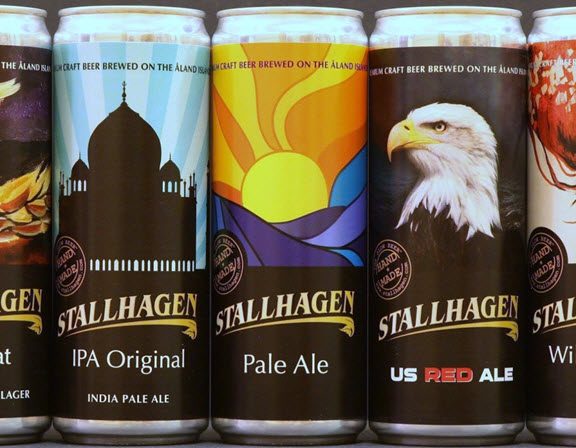
Stallhagen’s core range includes 24/7 Session IPA, Baltic Porter, Bock, Delikat, Historic Beer 1843, Honungsöl, IPA Original, Pale Ale, Pommern, Stallhagen Original, Styrman alcohol free IPA and US Red Ale. The brewery also lists specialty and seasonal beers such as Oktoberfest.
The range tells you how Stallhagen sees itself. It has classic lager styles, darker malt driven beers, British leaning ales, alcohol free options and one historic oddity that no competitor can easily copy. It does not look like a brewery chasing every trend with both shoes untied. It looks more like a brewery building a broad, drinkable range for locals, visitors, restaurants and beer people.
Bock adds another malt focused option. Stallhagen describes it as a dark lager with notes of dark malt, roasted nuts and caramel, suited to autumn and winter flavours. That gives the brewery a cold weather beer without needing to go as heavy as Baltic Porter.
The 24/7 Session IPA and Styrman alcohol free IPA also show that Stallhagen understands modern drinking habits. Not every beer moment needs 7% ABV and a sofa afterwards. Lower strength and alcohol free beers help a brewery stay relevant for lunches, drivers, weekday drinking, sauna recovery and all the other times people want flavour without feeling like they have signed a contract.
Pub Stallhagen and Beer Tourism
Stallhagen is also a visitor destination. The brewery invites guests to Pub Stallhagen, the brewery, beer tastings and its farm shop in Finström. The visitor page describes Stallhagen as a year round meeting place for both small and large groups, with indoor dining, outdoor seating, a small meeting room, visitor facilities and parking for tour buses.
Pub Stallhagen has 60 indoor seats and an outdoor terrace with room for 80 guests. The visitors’ centre can host groups of up to 60 people, while the farm shop sells Stallhagen beers along with Ålandic food products, crafts and gifts.
The brewery tour is short and practical. Stallhagen says the tour introduces the company and beer production, allows guests to look over the brewery and packaging area, includes one beer tasting and finishes at the farm shop. The listed group size is 10 to 60 people, and the tour lasts about 45 minutes.
That visitor model works because Stallhagen is not only selling beer. It is selling an Åland stop: lunch, local products, a beer tasting, maybe a tour, maybe live music, then a few bottles or cans to take away. For travellers, that is much stronger than simply finding the beer in a shop fridge.
Sustainability and the Baltic Sea
Stallhagen’s beer pages state that the brewery uses 100% green electricity and brews with wind energy. This fits naturally with its island and Baltic identity, where water, sea health and local resources are not abstract issues.
The brewery has also promoted Baltic Brew, described on its site as “From the sea, for the sea.” Third party descriptions of the project say Baltic Brew was brewed with a small share of desalinated Baltic Sea water and connected to support for Baltic Sea Action Group. The idea is simple enough: use beer to make people think about clean water, because beer drinkers tend to notice water quality once it threatens the pint.
For a brewery in Åland, that message is not decoration. The Baltic is part of the place, the travel route, the food culture and the local economy. A brewery talking about the Baltic Sea is not borrowing a cause from somewhere else. It is talking about the water around its home.
Why Stallhagen Matters
Stallhagen matters because it combines three things that many breweries struggle to hold at the same time: place, consistency and story. It is clearly an Åland brewery, not just a brewery that happens to be located there. It has a wide enough range to serve casual drinkers, food pairings and beer fans. And it owns one of the better beer stories in Northern Europe through Historic Beer 1843.
The brewery’s strongest point may be its sense of patience. Its beer philosophy talks about natural fermentation, local water, longer aging, original ingredients and hands on brewing. That language can sound quaint when a brewery does not back it up, but Stallhagen has the beer range and production history to make it credible.
For new drinkers, Stallhagen Original is the obvious starting point. It gives the clean Åland lager experience and the regional flag story in one bottle or can. IPA Original is better for those who prefer bitterness, malt and British style balance. Baltic Porter is the one to save for cheese, chocolate or cold weather. Historic Beer 1843 is the bottle for anyone who wants beer with a proper backstory, not just a loud label and a paragraph of nonsense.
Stallhagen is not trying to be the wildest brewery in the Nordic region. That is probably a good thing. Its strength is slower, steadier and more rooted. It makes beer from an island with its own character, sells it across nearby markets, welcomes people to the brewery, and keeps one foot in old brewing tradition while still making room for modern drinking habits.
In a beer market that often rewards noise, Stallhagen has done something more useful. It has built a brewery people can visit, beers people can return to, and a story that actually tastes like the place it came from.