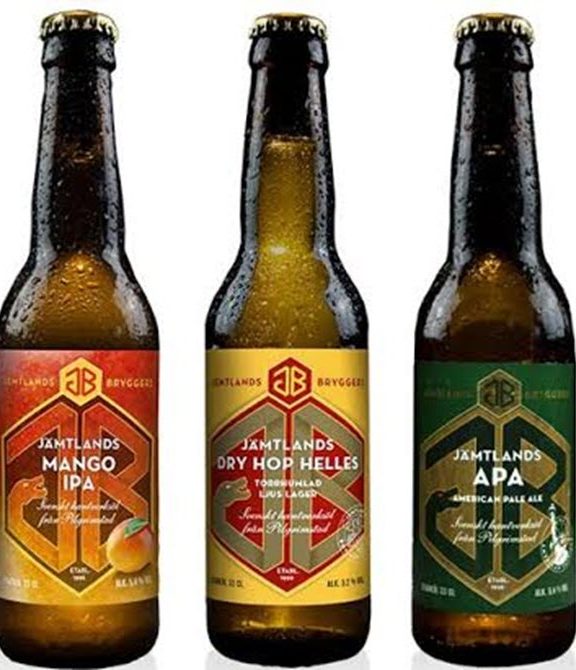
Jämtlands Bryggeri is one of Sweden’s best known craft breweries, based in Pilgrimstad, near Östersund in Jämtland. It has been brewing since the mid 1990s, long before Swedish craft beer became the supermarket shelf, bar tap and beer festival staple it is now. The brewery was founded in 1995, and its first beer, Jämtlands President, was brewed in January 1996. Since then, the brewery has built a reputation around well made lagers, ales, stouts, seasonal beers and a steady sense of local character.
This is not a brewery that feels like it was created in a marketing meeting. Jämtlands Bryggeri has roots in a small village, a former industrial building and a region that enjoys doing things its own way. That matters. Beer is never just malt, hops, yeast and water. It carries place, habits, weather, food, jokes, local pride and the sort of stories people repeat after the second glass, sometimes more accurately than after the third.
For beer drinkers, Jämtlands Bryggeri offers an interesting mix. It has enough heritage to appeal to people who like classic Swedish beer styles, but it has also kept adding newer beers, including IPAs, cold IPAs, seasonal releases and, more recently, alcohol free hop water. The result is a brewery that feels established without feeling dusty.
Quick Profile: Jämtlands Bryggeri
| Detail | Information |
|---|---|
| Brewery name | Jämtlands Bryggeri AB |
| Location | Pilgrimstad, Jämtland, Sweden |
| Founded | 1995 |
| First beer | Jämtlands President, brewed in January 1996 |
| Known for | Swedish craft beer, award winning beers, seasonal releases, Jämtland identity |
| Production capacity | Around 1,000,000 litres per year, according to the brewery |
| Notable beers | President, Bärnsten, IPA, Coffee Stout, Mango IPA, HELL, Pilgrim Ale |
| Current positioning | One of Sweden’s most awarded craft breweries |
Jämtlands Bryggeri states that it has a possible annual production of around 1,000,000 litres of beer, and describes itself as Sweden’s most awarded brewery, with 133 medals at Stockholm Beer and Whisky Festival and close to 200 total prizes since its start. Those are not small bragging rights, especially in a country where craft brewing has moved from niche interest to serious competition.
From Storsjöyran Idea to Pilgrimstad Brewery
The story begins in 1995 with an idea connected to Storsjöyran, the famous festival in Östersund. According to the brewery’s own history, Östersund restaurateur Kjell Andersson asked Carl Lindgren whether it was time to create a beer for the festival. The name was to be Jämtlands President, a nod to the local humour and proud regional identity of Jämtland.
A small microbrewery was bought from the Gothenburg area and moved north to Pilgrimstad. The brewing equipment was installed in a former board factory that had been closed for several years. That origin story says a lot. This was not a shiny, risk free launch. It was closer to the older craft model: find a place, move the kit, work hard, and hope people like what comes out of the tanks.
The first years were tough. The brewery says it struggled to become profitable in its first four years, and Kjell Andersson later sold his share to Carl Lindgren, who continued the project with the goal of making good beer in Jämtland.
That early struggle gives the brewery part of its credibility. Many modern beer brands are launched with polished branding, social media plans and limited edition cans designed before the beer has earned a following. Jämtlands Bryggeri came from a more stubborn place. It had to survive before it could become respected.
The David Jones Effect
A major turning point came at the end of 1996, when Carl Lindgren brought in English brewer David Jones. The brewery describes Jones as a highly skilled brewer who changed its prospects and became a model for Swedish microbrewed beer. Under his influence, Jämtlands Bryggeri began winning medals at Stockholm Beer & Whisky Festival and became a brewery that others looked up to.
This matters because Swedish craft beer in the late 1990s was not what it is today. There were fewer breweries, fewer specialist beer bars and far less public knowledge of ale styles, hop varieties or small batch brewing. A skilled brewer could make a huge difference, not only to one brewery but to drinkers’ expectations.
Jones helped set a tone that still seems visible in the brewery’s range. Jämtlands beers often sit between British brewing influence and Swedish drinkability. They are usually not stunt beers. They do not need to taste like breakfast cereal, birthday cake or a melted sweet shop to get attention. The stronger impression is of balance, malt structure and a habit of making beers that can be drunk with food.
David Jones later returned as brewmaster in 2019, with the brewery saying he was keen to develop newer, more modern beers with clearer hop character. That helped add beers that complemented the brewery’s more malt driven classics.
Pilgrimstad, Jämtland and the Power of Place
Jämtlands Bryggeri is based in Pilgrimstad, around 30 kilometres from Östersund. The brewery links the village name to pilgrims who travelled toward the grave of St Olaf in Trondheim and stopped at Pilgrimskällan, the local spring, to drink its clean water. Local legend says pilgrims left crutches around the spring after being cured of their ailments. That is a useful story for a brewery. Clean water, old roads, tired travellers and a little miracle marketing from the Middle Ages.
Place is a major part of the Jämtlands Bryggeri brand. The name alone places the beer in northern inland Sweden, far from the major brewing centres of Stockholm, Gothenburg and Malmö. In practical terms, that helps the brewery stand out. In emotional terms, it gives every bottle and can a regional accent.
Jämtland has a strong identity, often expressed through the playful idea of the “Republic of Jämtland”. Visit Östersund even notes that Jämtlands Bryggeri’s first beer being called President fits neatly with that local character.
That is part of the charm. A beer called President from a region with its own semi comic republic mythology feels less like branding and more like a raised eyebrow. It gives the beer a story before anyone has opened it.
The Beer Range: Classics, Seasonal Releases and Newer Styles
Jämtlands Bryggeri now offers a broad range covering standard strength beers, folköl, seasonal beers and other drinks. Its current drinks page lists beers such as Bärnsten, IPA, Pilgrim Ale, President, Lucifer, HELL, Älva, Winter Ale, Troll, Huldra, 1996, Coffee Stout, Mango IPA, Steamer, Baltic Stout, Julöl and Påsköl, alongside newer products such as Humlevatten.
One notable detail is that the brewery describes its beers as “färsköl”, meaning they are filtered but not pasteurised. The brewery also states that its beers contain no additives or preservatives, which gives them a shorter shelf life than pasteurised beers. That is the trade. You get freshness and a less processed product, but you do not leave it forgotten at the back of the cupboard until the next ice age.
Jämtlands President
President is the brewery’s original beer and still one of its central names. Systembolaget lists Jämtlands President as a 5.2% light lager from Bräcke municipality in Jämtland County, with a malty taste and notes of light bread, citrus peel and honey. It is recommended with fish, light meat or as a social drink.
That profile says a lot about the brewery’s roots. President is not trying to beat the drinker into submission with bitterness or alcohol. It is built around clean malt, moderate bitterness and usefulness at the table.
Jämtlands IPA
Jämtlands India Pale Ale is one of the brewery’s best known stronger beers. Systembolaget describes it as 5.5% with a hop aromatic taste, clear bitterness and notes of apricot marmalade, crispbread, herbs and grapefruit. It is suggested with flavourful vegetarian dishes or pork, lamb and beef.
The beer has been around long enough to feel like a Swedish craft beer classic rather than another IPA chasing the latest hop fashion. In 2026, Livets Goda reported that Jämtlands IPA was being relaunched on can, after more than ten years in Systembolaget’s fixed range.
Coffee Stout
Jämtlands Coffee Stout shows the darker side of the brewery. Systembolaget lists it as a 7% beer with malty sweetness and notes of pumpernickel, coffee, dark chocolate, prunes and spices. It is recommended at 12 to 14°C as a social drink or with dark meat.
This beer also appears in Visit Sweden’s profile of Swedish microbreweries, where Jämtlands Bryggeri is described as a respected force in Swedish beverages. Visit Sweden notes that the Coffee Stout is made with locally roasted coffee, which adds another regional layer to the beer.
Mango IPA, Huldra and the Modern Hop Side
The brewery has also moved into brighter, fruitier territory. Systembolaget describes Jämtlands Mango IPA as a 5.4% beer with mango, honey, apricot, rosemary and orange peel notes. Huldra, meanwhile, is described as a 5.8% beer with passion fruit, pineapple, grapefruit, sponge cake and pine needles.
These beers show that Jämtlands Bryggeri has not stayed locked in 1996. The brewery has brought in modern hop expression without losing the steadier house style that made its name. That is harder than it sounds. Many older breweries either refuse to move or overcorrect and suddenly behave like they have discovered Citra hops at a nightclub. Jämtlands seems to have taken the calmer route.
Pilgrim Ale Returns
In 2026, the brewery brought back Pilgrim Ale as part of its 30 year celebration. The brewery describes it as a 4.5% English pale ale, a classic from the past in a new form, and one of its most requested beers. The beer is described as copper red, with a malty aroma, light floral hop notes, and flavours of dark bread, dried fruit and citrus.
That return is smart because it connects old customers with newer ones. Long time drinkers get a familiar name back. Newer drinkers get to taste a beer tied to the brewery’s early years. It is nostalgia with a working recipe, not just a label pulled from the archives.
Awards and Reputation
Jämtlands Bryggeri has long promoted itself as one of Sweden’s most awarded breweries. The brewery says it has taken 133 medals at Stockholm Beer and Whisky Festival and close to 200 total prizes since launch. Visit Östersund also describes it as one of Sweden’s most acclaimed breweries and notes its 130 plus medals at Stockholm Beer and Whiskey Festival.
Awards are not everything in beer. Plenty of brilliant beers never win medals, and plenty of medal winning beers still depend on personal taste. Even so, repeated success over many years tells you something. It suggests consistency, technical skill and a brewing team that understands both recipe design and execution.
That last part is often overlooked. A beer idea is easy. A stable beer, brewed repeatedly, packaged cleanly and sent across the country without losing its character is a different job. Jämtlands Bryggeri’s reputation rests on that less glamorous work as much as on any single award.
A Brewery That Has Kept Updating
Jämtlands Bryggeri’s history shows several periods of change. In 2008, Mats Nyström took over as brewmaster, bringing family brewing experience as a third generation brewer. In 2016, the brewery invested in a new bottling line and moved from 50 cl bottles to 33 cl bottles. In 2022, it added canned beers alongside its bottle production and installed a new bottle labelling machine.
Those changes may sound operational, but they affect how people buy and drink the beer. A 33 cl bottle is easier to place in modern retail, easier to pair with food and less of a commitment than a 50 cl bottle. Cans allow newer beer styles to sit comfortably in the craft beer section, where many modern drinkers expect hop forward beers to appear in that format.
The brewery also went through a major ownership shift. Carl Lindgren, one of the brewery’s founders and long time owners, died in spring 2024. After that, Alexandra Lindgren Jansson and Anders Thelenius continued to run the brewery as a partly family owned company.
That continuity matters. In brewing, leadership changes can either dilute a brand or renew it. Jämtlands Bryggeri seems to have taken the second path: keeping its old identity, while adding new products and formats.
Brewery Tours and Beer Tourism
Jämtlands Bryggeri also offers brewery visits in Pilgrimstad for pre booked groups. Its tour page lists several packages, including a guided tour, a tour with beer tasting, and a tour with beer tasting and food. The brewery states that visits are for closed groups, with no fixed tour times, and that arrangements are agreed in dialogue with guests.
This makes sense for a working brewery. It is not a theme park with stainless steel in the background. It is a production site. That means tours need to fit around brewing, packaging and the everyday business of getting beer made.
For visitors to Jämtland, the brewery gives a useful food and drink stop outside the standard mountain and city route. Visit Östersund lists Jämtlands Bryggeri among local microbreweries and beer producers, placing it alongside other regional names in the area’s growing beer culture.
Why Jämtlands Bryggeri Still Matters
Jämtlands Bryggeri matters because it sits at a useful crossroads in Swedish beer. It is old enough to be part of the first major wave of Swedish microbrewing, but active enough to still release new products. It has regional character without turning itself into a souvenir. It makes classic beers without sounding bored by them. And it makes newer hop forward beers without pretending the last 30 years never happened.
The brewery’s real strength is balance. That applies to the beers, but also to the brand. Jämtlands Bryggeri has never needed to be the loudest brewery in Sweden. It has relied on medals, repeat drinkers, Systembolaget presence, local pride and beers that make sense with food. That is not flashy, but it is durable.
For anyone interested in Swedish craft beer, Jämtlands Bryggeri is a brewery worth knowing. Start with President to understand the origin. Try IPA for the classic craft side. Go to Coffee Stout for depth. Pick Mango IPA, Troll or Huldra for a more modern hop profile. And when the seasonal beers arrive, pay attention, because the brewery has been making Christmas and Easter beers long enough to know what Swedish drinkers expect from a proper festive bottle.
The story of Jämtlands Bryggeri is not just about beer from northern Sweden. It is about timing, persistence and a village brewery that grew into a national name without sanding off all its local edges. In a beer market that can sometimes feel a bit too busy with novelty, that kind of staying power deserves respect.